Unified platforms for calls, chats, and automation.
From Meta ads to SEO - grow your brand with strategy.
Custom digital products designed to scale performance.
A VOIP API (Voice over Internet Protocol Application Programming Interface) is a set of tools and protocols that allow developers to add calling and messaging features directly into software or mobile apps. Instead of building an entire communication system from scratch, developers use a VOIP API to connect their app to an existing cloud telephony platform.
In simple terms, a VOIP API acts as a bridge between your app and internet-based communication services. When a user makes a call or sends a voice message, the API routes the data through secure cloud servers instead of traditional phone networks. This allows apps to handle real-time voice and video calls, SMS, and even IVR menus-all within the same interface.
Developers use VOIP APIs because they make communication features faster, scalable, and easier to manage. Whether you’re building a customer support app, an e-commerce chatbot, or a healthcare communication platform, a VOIP API lets you deliver seamless calling and messaging without investing in physical phone systems.
In short, the VOIP API transforms ordinary applications into full-featured communication tools by connecting them directly to the internet-based voice network.
Table of Content
ToggleModern VOIP API solutions give developers everything they need to build smooth, real-time communication experiences. Whether it’s voice, video, or chat – these APIs bring flexibility, control, and high-quality performance to any app.
A VOIP API lets you add instant voice and video calling into your app without setting up heavy telecom infrastructure. It supports peer-to-peer and group calls, ensuring clear communication over the internet. Most APIs come with noise reduction and adaptive bitrate technology to maintain excellent VOIP call quality, even with low bandwidth.
Developers can easily enable call recording to store or review conversations for quality checks, training, or compliance. Integrated analytics show real-time data like call duration, latency, and network performance – helping businesses measure customer experience and optimize every call.
A single VOIP API can power apps across Android, iOS, and web browsers. Developers use SDKs and libraries to build once and deploy everywhere. This ensures a consistent experience for users, no matter which device they use.
Most VOIP APIs are designed for quick and flexible integration. They connect smoothly with CRM systems, helpdesks, and chat platforms using REST or WebSocket protocols. This allows businesses to combine voice, video, and chat inside one unified communication flow – without changing their current setup.
For scalable and developer-friendly communication, explore your local VOIP service provider and find the right business VOIP solutions for your app.
Integrating a VOIP API into your application brings powerful advantages that go beyond simple calling features. Developers and businesses use these APIs to save money, improve call performance, and ensure secure communication at every level.
A VOIP API removes the need for traditional phone hardware or private telecom lines. You only pay for what you use – making it ideal for startups and enterprises that want flexible pricing. As your user base grows, you can easily scale up to handle more calls, messages, or users without changing your entire system.
Modern VOIP API solutions use intelligent routing, automatic bandwidth adjustment, and noise suppression to maintain excellent VOIP call quality even under unstable networks. This ensures users enjoy clear, uninterrupted conversations whether they’re on mobile or desktop.
Security is built into every reliable VOIP API. These systems use end-to-end encryption, secure tokens, and TLS/SRTP protocols to protect voice and video data from unauthorized access. Developers can also integrate VPNs or private cloud setups to add an extra layer of security for enterprise-grade communication.
With the right VOIP API, developers can deliver reliable, secure, and cost-efficient communication experiences that grow with their apps – a foundation every modern business VOIP solution needs.
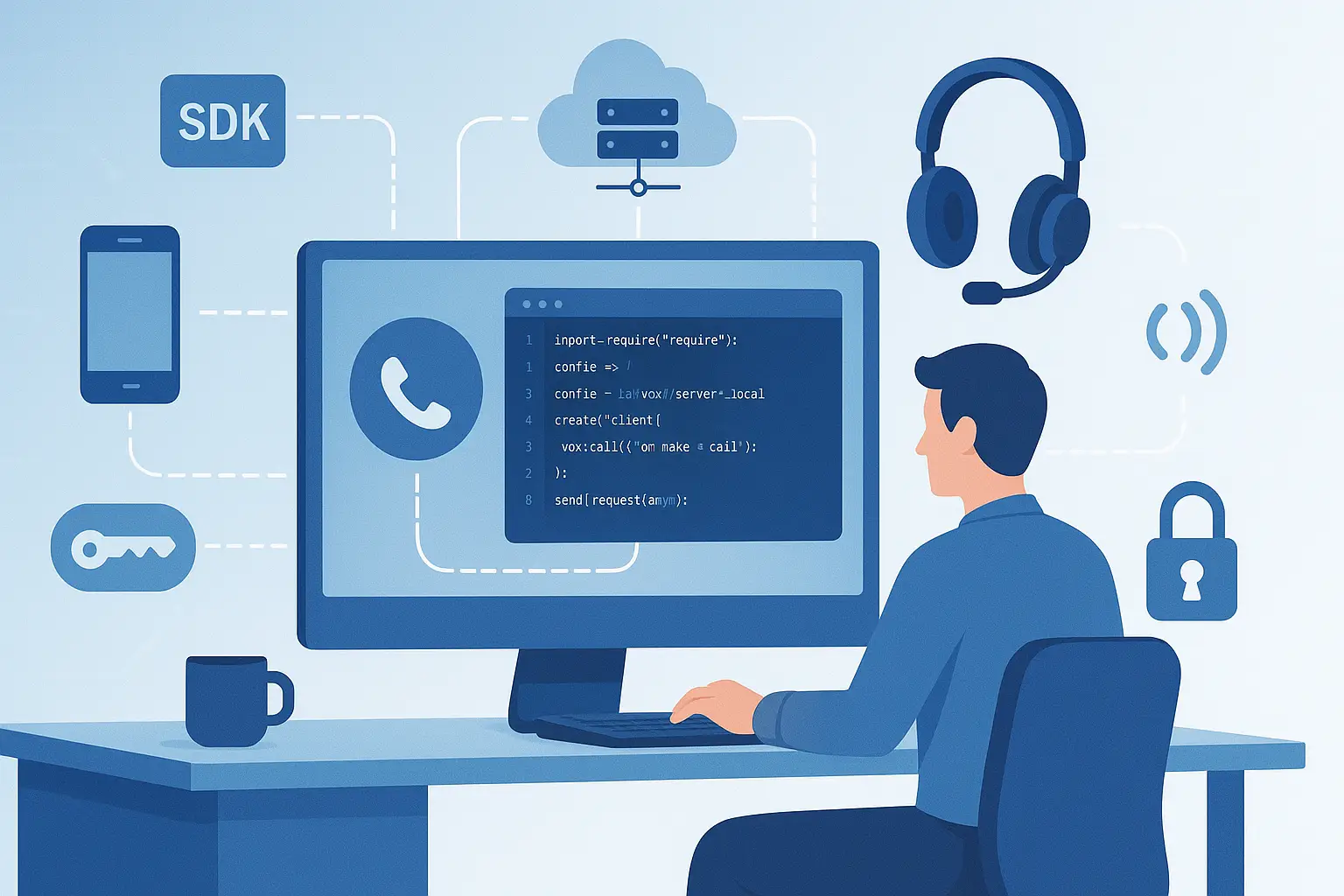
Integrating a VOIP API is simpler than it sounds. Modern APIs come with SDKs, libraries, and detailed documentation that help developers add calling features to any app in just a few steps.
Start by selecting a trusted VOIP API provider in India that offers SDKs for your preferred platform – Android, iOS, or web. Look for features like scalability, call analytics, and strong encryption.
After signing up, you’ll receive API keys or tokens to authenticate your app. These credentials connect your application to the provider’s VOIP servers securely.
Use your platform’s package manager (like npm, Gradle, or CocoaPods) to install the SDK. This library will handle voice, video, and signaling logic so you can focus on app functionality.
Enable microphone, camera, and internet permissions in your app. Test your network firewall to ensure it doesn’t block real-time communication ports.
Use API endpoints to initiate, receive, and manage VOIP calls. Many APIs also let you add call recording, IVR menus, or in-app notifications.
Run test calls to monitor VOIP call quality. Adjust bitrate, codec, and latency settings for smoother performance under different network conditions.
With these steps, developers can add powerful voice and video features into any app quickly. For full-scale deployment, connect with a professional VOIP service provider in Delhi NCR and other your local area to ensure stability, compliance, and 24/7 technical support.
The true power of a VOIP API becomes clear when you see how businesses across industries use it to simplify communication and improve customer experience. From startups to large enterprises, these APIs make voice and video calls smarter, faster, and more affordable.
Startups use VOIP API solutions to launch call or chat support inside their apps without investing in expensive phone systems. With just a few lines of code, they can offer instant calling, voice mail, or IVR menus for customers. This helps small teams appear professional and respond faster.
Large companies use VOIP APIs to connect multiple departments and offices under one system. Integration with CRMs like Salesforce or HubSpot helps teams track calls, monitor VOIP call quality, and analyze customer data in real time. It reduces missed calls and improves coordination across teams.
ECommerce platforms embed VOIP APIs to automate customer updates through calls or voice bots. For example, customers can call a number to track orders, make changes, or connect to the nearest support agent – all handled automatically through the API.
Developers use VOIP APIs to add secure voice or video features inside apps like healthcare, education, or on-demand delivery platforms. It improves user trust and engagement without redirecting them to third-party apps.
When developers plan to integrate a VOIP API, one of the first decisions they face is whether to choose an open-source or paid solution. Both options have strengths, and the best choice depends on your project’s goals, budget, and technical resources.
Open-source VOIP APIs are ideal for developers who want full control and customization. These platforms let you modify the code, host it on your own servers, and build custom communication features without license fees.
Use open-source VOIP APIs when you’re building internal tools, experimental projects, or educational platforms where cost and flexibility matter more than enterprise-level performance.
Paid VOIP API solutions offer ready-to-use SDKs, 24/7 technical support, and guaranteed uptime. They handle hosting, scaling, and compliance – saving developers valuable time. These are ideal for businesses that need reliability, real-time analytics, and advanced security features like end-to-end encryption.
The VOIP API has changed how developers build communication into modern apps. Instead of complex telecom setups, APIs make it easy to embed voice, video, and chat features with just a few lines of code.
For developers, the benefits go beyond convenience – a VOIP API offers scalability, security, and flexibility that traditional systems can’t match. Startups can launch in-app calling within days, while large enterprises can manage thousands of secure calls across multiple platforms using the same technology.
As communication becomes a vital part of every digital experience, developers who understand and use business VOIP solutions gain a major edge. Whether you’re building a mobile app, web tool, or customer portal, integrating a reliable VOIP API ensures smooth performance, lower costs, and a better user experience.
A VOIP API allows developers to add calling, messaging, and conferencing features directly into apps or websites. It’s commonly used in customer support, chat apps, and business tools to enable voice or video communication without traditional phone networks.
A VOIP API connects your app to cloud telephony servers that route voice data over the internet instead of mobile networks. It uses secure communication protocols like SIP and WebRTC to deliver real-time audio and video between users.
To integrate a VOIP API with Shopify, developers can use webhooks or middleware tools to link store data with a cloud communication platform. This setup allows automated customer calls, order updates, or voice-based support right from the store dashboard.
Yes. Several providers offer free VOIP API plans for developers to test voice and video features. These usually include limited call minutes, sandbox environments, or trial keys ideal for prototype or demo apps.
The best VOIP API for mobile apps depends on your use case. For example, Twilio and Agora are strong for global scalability, while Indian providers may offer better pricing and regional support. Always compare latency, SDK quality, and documentation before choosing.
Both allow communication features, but a Voice API focuses mainly on phone calls through internet or PSTN, while a VOIP API supports a wider range of features including video, conferencing, and real-time messaging.