Unified platforms for calls, chats, and automation.
From Meta ads to SEO - grow your brand with strategy.
Custom digital products designed to scale performance.
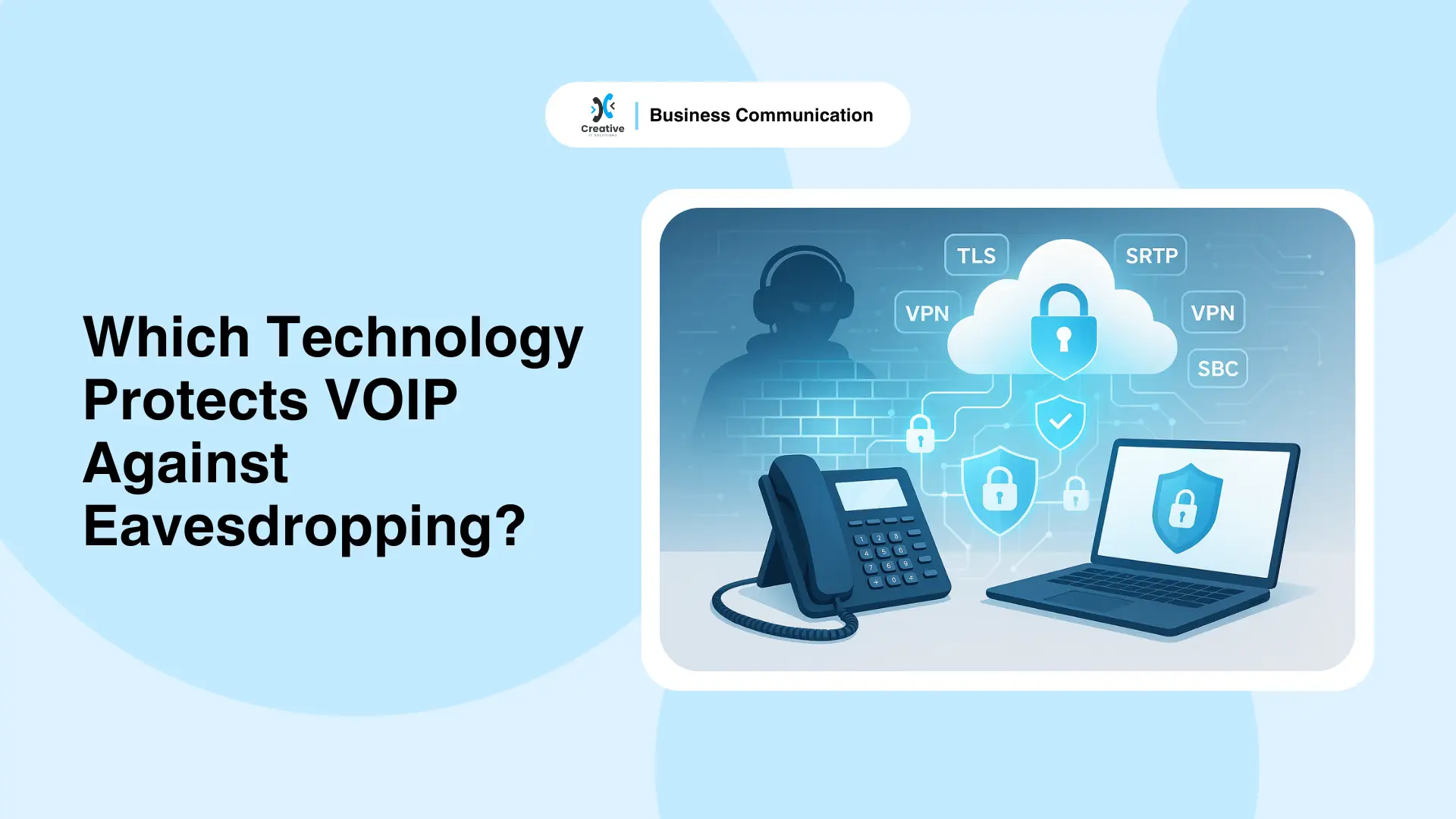
One of the biggest threats to VOIP communication is eavesdropping – when hackers secretly intercept calls to steal sensitive information or monitor conversations. For startups and SMEs in India, this can lead to data leaks, financial fraud, and even loss of customer trust.
Many business owners ask the same question: Which technology protects VOIP against eavesdropping? The answer lies in using a combination of security protocols, encryption methods, and protective tools that keep your calls private and your systems safe.
In this guide, we’ll break down the most effective VOIP security technologies, explain why they matter, and show how Indian businesses can secure their communication with the right approach.
Table of Content
ToggleVOIP eavesdropping happens when someone secretly listens to your internet-based calls without permission. Just like tapping a landline, hackers can tap into VOIP networks by exploiting weak security. Since VOIP converts voice into digital packets that travel over the internet, unprotected calls can be captured and decoded.
Hackers use different tricks to access VOIP traffic:
Once they have access, attackers can replay conversations, steal login credentials, or even sell the data.
For startups and SMEs, the impact of VOIP eavesdropping can be serious:
Example: An SME in Delhi handling customer payments over VOIP could face financial fraud if hackers intercept card details during a call.
When business owners ask, “Which technology protects VOIP against eavesdropping?”, the answer isn’t just one tool – it’s a combination of modern security technologies. Let’s break them down.
Example: An SME in Gurgaon using VOIP without SRTP risks having client conversations recorded by attackers on the same network. With SRTP enabled, the call remains private.
Enterprises often use SBCs for compliance and monitoring. For SMEs, managed firewalls offer affordable but strong protection.
A Virtual Private Network (VPN) creates a secure tunnel for your VOIP calls. This hides your call traffic from hackers and prevents interception, especially when employees work remotely on public Wi-Fi.
Example: A remote employee in Bangalore making VOIP calls over café Wi-Fi is at risk of eavesdropping. With a VPN, the call data is encrypted and hidden from attackers.
The strongest protection comes from combining technologies:
Multi-layer security ensures that even if one layer is bypassed, others still protect the call.
In short, the best answer to “Which technology protects VOIP against eavesdropping?” is not one tool, but a layered approach. Encryption, firewalls, SBCs, and VPNs together make VOIP communication secure, reliable, and ready for business use.
When business owners ask how to secure their VOIP calls, the first answer is encryption. Without it, calls are like postcards: anyone on the network can read them. With encryption, calls are scrambled into unreadable data, safe from hackers. Let’s look at the three main types.
TLS protects the signaling part of a VOIP call – details like who is calling, when the call starts, and how the session is set up.
Think of TLS as sealing the envelope around your call request so no one can peek at the sender and receiver details.
SRTP protects the actual voice stream – the conversation itself.
For an SME in Delhi handling client payments over VOIP, SRTP ensures that sensitive numbers or discussions cannot be stolen mid-call.
End-to-end encryption goes a step further. Instead of just securing parts of the call, it encrypts everything from the caller’s device to the receiver’s device.
If your business handles sensitive client data daily, end-to-end VOIP encryption provides the highest level of protection against eavesdropping.
In short, VOIP encryption is the first layer of defense against eavesdropping. TLS secures call setup, SRTP locks down the audio, and end-to-end encryption gives businesses maximum privacy.
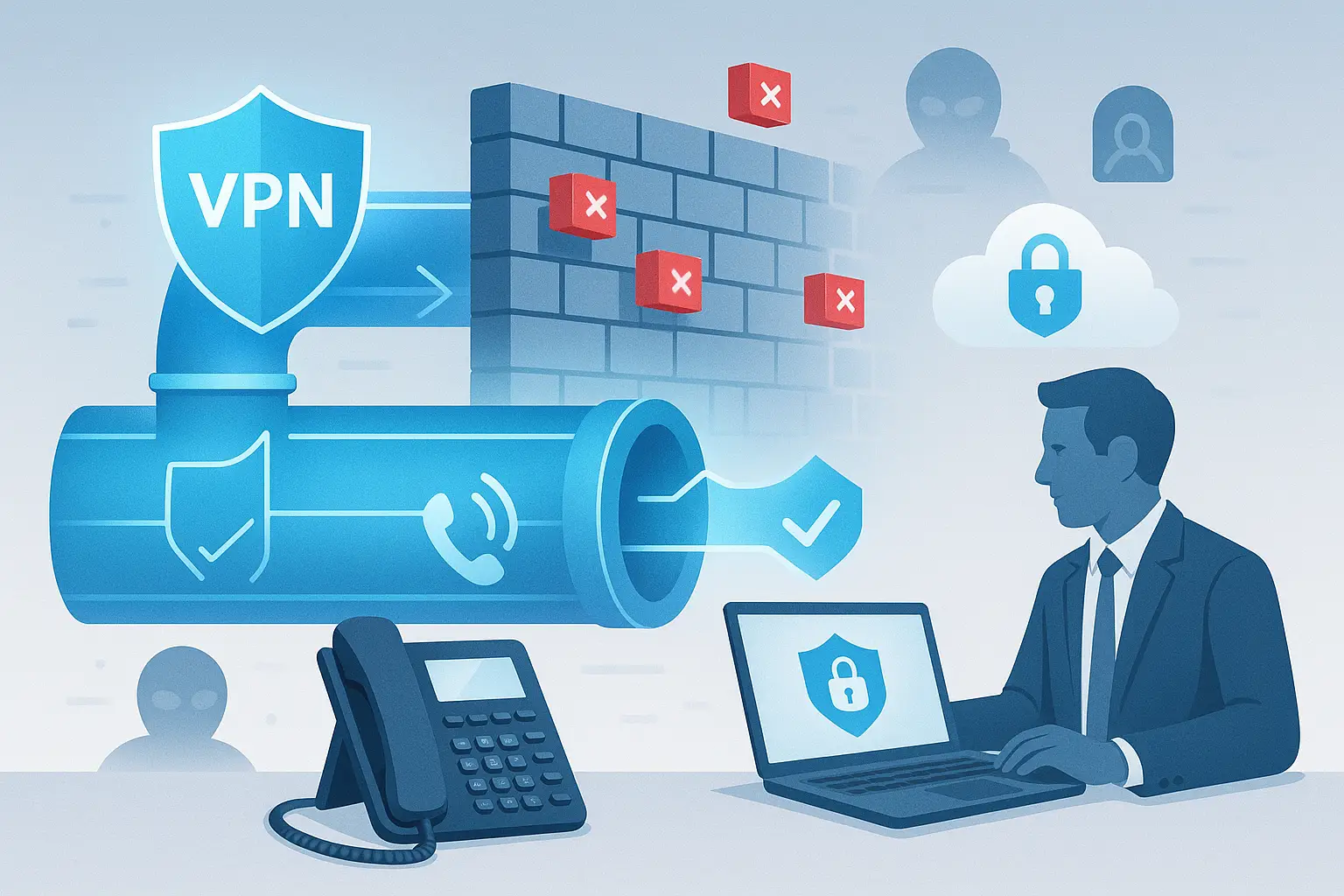
While encryption is the first line of defense, it’s not enough on its own. Businesses also need tools that hide VOIP traffic and block suspicious activity. Two of the most effective technologies for this are VPNs and VOIP firewalls.
A Virtual Private Network (VPN) creates a secure “tunnel” for your VOIP calls. It hides call traffic from hackers by encrypting everything between your device and the server.
Example: An employee in Bangalore using café Wi-Fi to make a client VOIP call could be exposed to eavesdropping. With a VPN, the call data is invisible to anyone on that network.
A VOIP firewall is built specifically for internet calling. Unlike regular firewalls, it understands VOIP protocols and can filter harmful traffic.
For SMEs in Delhi handling multiple client calls daily, a VOIP firewall ensures that only legitimate traffic gets through, protecting call quality and reducing downtime.
Not every SME has the technical skills to configure firewalls. That’s where managed firewall services come in:
For growing SMEs, managed firewalls offer enterprise-level VOIP security without the cost of hiring in-house IT staff.
For businesses that handle a high volume of calls, a Session Border Controller (SBC) is like a digital security guard for your VOIP system. While VPNs and firewalls protect traffic, SBCs go further by controlling, monitoring, and securing every VOIP session that enters or leaves your network.
An SBC sits between your internal VOIP network and the outside world. It:
Think of an SBC as the reception desk of your VOIP system – it checks IDs, verifies visitors, and blocks anyone suspicious.
Without proper security, hackers can hijack VOIP lines to make expensive international calls – a common scam known as toll fraud.
Example: An SME in Delhi with overseas clients can lose thousands in minutes if fraudsters hijack their VOIP line. An SBC stops this before damage occurs.
For industries like finance, healthcare, and BPOs, compliance is critical. SBCs provide:
For a call center in NCR, an SBC not only protects calls but also helps prove compliance during regulatory checks.
In short, SBCs provide enterprise-grade protection by acting as a gatekeeper, fraud detector, and compliance enforcer. For SMEs moving into large-scale VOIP use, adding an SBC ensures safe, reliable, and legally compliant communication.
Technology like encryption, firewalls, and SBCs play a big role in VOIP security, but businesses must also follow good practices every day. These small steps make a big difference in protecting your calls from eavesdropping and fraud.
Example: A Delhi SME using an old PBX without updates left itself open to a known vulnerability that hackers exploited to reroute calls.
Weak or reused passwords are easy to crack.
This is especially important for admin accounts that manage call routing and billing.
Unusual call behavior often signals an attack.
Example: A sudden burst of calls to overseas numbers could mean toll fraud – quick monitoring can stop it in minutes.
Employees are often the weakest link in VOIP security.
Even the best technology won’t help if your team isn’t trained to use VOIP securely.
In short, VOIP security is a mix of strong technology and smart daily habits. By keeping systems updated, using strong passwords, monitoring traffic, and training staff, SMEs can reduce risks and keep customer communication safe.
When it comes to VOIP security, Indian businesses have unique challenges. It’s not just about technology – compliance with telecom rules is equally important. Ignoring these can lead to penalties, service disruptions, or even legal issues.
In India, VOIP services are regulated by the Department of Telecommunications (DoT) and must follow strict guidelines:
For SMEs, this means always working with a licensed provider instead of setting up unsecured or DIY VOIP systems.
The Delhi NCR region is home to thousands of startups, IT companies, and BPOs that rely heavily on customer calls. These businesses face:
As a result, more SMEs are moving from basic VOIP setups to secure cloud telephony systems that combine encryption, firewalls, monitoring, and compliance support.
If your business depends on VOIP communication, don’t leave security to chance. Partner with a licensed, reliable VOIP service provider in Delhi NCR to ensure your calls are encrypted, compliant, and backed by 24/7 support.
VOIP security in India is not optional – it’s a must. By choosing licensed providers and investing in secure cloud telephony, SMEs protect their customers, avoid legal risks, and build long-term trust.
Explore our Cloud Telephony services at Creative IT Solutions and discover how a trusted VOIP service provider in Delhi NCR can protect your calls, reduce costs, and scale with your growth.
The best technologies include encryption (TLS and SRTP), VOIP firewalls, Session Border Controllers (SBCs), and VPNs. Together, they prevent hackers from listening to your calls.
Businesses should use TLS for signaling, SRTP for voice encryption, and VPNs for remote access. Adding SBCs and managed firewalls gives enterprise-grade protection.
The most secure measure is end-to-end VOIP encryption, where calls are encrypted from one device to the other, making it impossible for anyone – even providers – to intercept.
The Secure Real-Time Transport Protocol (SRTP) protects the actual audio stream in VOIP calls, ensuring conversations remain private even if intercepted.
VOIP uses Voice over Internet Protocol to transmit voice as digital data packets over the internet instead of traditional copper phone lines.
The most common technique is data encryption, where call data is scrambled into unreadable packets. In VOIP, this is done using TLS and SRTP.
VOIP security refers to the tools, technologies, and best practices used to protect internet-based calls from threats like eavesdropping, call hijacking, and fraud.
Without VOIP security, businesses risk data leaks, financial fraud, and compliance violations. For SMEs in India, secure VOIP ensures reliable communication and customer trust.