
Unified platforms for calls, chats, and automation.
From Meta ads to SEO - grow your brand with strategy.
Custom digital products designed to scale performance.
Communication in India is changing fast. Businesses are moving away from traditional phone lines and shifting toward internet-based VOIP systems that offer more flexibility, lower costs, and better control. This change is not a trend anymore – it’s becoming the new standard.
Digital-first businesses, startups, and growing SMEs now rely on cloud tools to run their daily operations. With remote and hybrid work becoming common across India, companies need communication systems that work from anywhere, not just from an office desk. VOIP fits perfectly into this new way of working.
By 2026, the future of VOIP in India will be shaped by faster internet, wider 5G coverage, and smarter cloud technology. Teams will expect seamless calling, video meetings, and customer communication across devices – all from a single platform. Traditional calling systems simply can’t keep up with these expectations.
As businesses focus more on flexibility, scalability, and cost efficiency, VOIP is set to become the backbone of business communication in India. The next few years will define how companies connect, collaborate, and grow in a digital-first economy.
Table of Content
ToggleVOIP is no longer new in India. Many businesses already use it every day, even if they don’t always call it “VOIP.” Internet-based calling has quietly become part of how companies communicate, support customers, and manage teams.
Across India, startups and established companies use VOIP for daily business calls. Sales teams, founders, and managers rely on VOIP numbers to talk to clients without worrying about high call charges or location limits. Calls work from offices, homes, or while traveling, which makes VOIP far more practical than traditional phone lines.
Cloud telephony has seen strong adoption in India, especially among growing businesses. Instead of maintaining physical phone systems, companies manage calls through online dashboards. Features like call routing, IVR menus, call recording, and analytics are now common, helping businesses handle communication more efficiently.
Customer support and service teams across industries use VOIP to manage high call volumes. Call centers, e-commerce brands, and service providers depend on VOIP systems to track calls, monitor agent performance, and improve response times. VOIP makes it easier to scale support operations without heavy infrastructure costs.
With remote and hybrid work becoming normal in India, VOIP plays a key role in keeping teams connected. Employees use laptops or mobile apps to make official business calls from anywhere. This flexibility allows companies to hire talent from different cities while maintaining professional communication standards.
Overall, the current state of VOIP in India shows one clear pattern: businesses are choosing internet-based communication because it fits modern work styles. This strong foundation is why the future of VOIP in India looks even more promising in the years ahead.
The future of VOIP in India looks strong because the country is changing at a fundamental level – how people work, how businesses grow, and how communication happens. Several big factors are coming together to push VOIP forward, and these drivers are long-term, not temporary.
India now has one of the lowest data costs in the world. High-speed broadband and mobile internet are accessible even in smaller cities. This makes internet-based calling reliable and affordable for businesses of all sizes. As internet quality improves, VOIP becomes a natural replacement for traditional phone systems.
The rollout of 5G will further strengthen the future of VOIP in India. Faster speeds, lower latency, and more stable connections will improve call quality and support advanced features like HD voice and video communication. With 5G, VOIP will perform even better on mobile devices, making location-independent calling seamless.
India’s startup and SME ecosystem is expanding rapidly. These businesses prefer flexible, cloud-based tools over expensive legacy systems. VOIP fits this need perfectly by offering scalable communication without heavy setup or long-term contracts. As more startups enter the market, VOIP adoption will continue to rise.
Indian businesses increasingly work with global clients and customers across time zones. Traditional phone systems struggle to support this level of availability. VOIP allows teams to stay connected 24/7 using the same business number from anywhere, meeting the expectations of international clients.
Together, these factors create a strong foundation for growth. That’s why the future of VOIP in India isn’t just promising – it’s inevitable. VOIP aligns with how India is building its digital economy and how businesses plan to operate in the years ahead.
The future of VOIP technology in India will be shaped by smarter software, faster networks, and deeper integration with business systems. VOIP is no longer just about making calls over the internet. It is evolving into an intelligent communication layer that connects people, data, and workflows.
Artificial intelligence will play a major role in how VOIP systems handle calls. Instead of basic rule-based routing, AI will analyze caller intent, past interactions, and call patterns to route calls to the right person instantly. This reduces wait times and improves the overall calling experience, especially for customer-facing teams.
Traditional IVR systems feel slow and frustrating. The future of VOIP in India will move toward smart IVR and voice bots that understand natural language. Callers will be able to speak normally instead of pressing multiple keys. These systems will answer common questions, book appointments, and transfer calls only when human support is truly needed.
As 5G networks expand, VOIP call quality will improve significantly. Lower latency and higher bandwidth will support HD voice and video calls, even on mobile devices. This will make VOIP more reliable for field teams, remote workers, and businesses operating across cities and countries.
VOIP systems will increasingly connect directly with CRMs, helpdesk tools, and automation platforms. Calls will automatically log customer details, notes, and follow-ups. This tight integration turns VOIP into a productivity tool, not just a communication channel, and strengthens the VOIP connecting future where voice data drives smarter business decisions.
Overall, the future of VOIP technology in India points toward systems that think, adapt, and integrate. VOIP will become a central part of how businesses communicate, analyze customer interactions, and automate everyday operations.
The future scope of VOIP in India goes far beyond basic calling. As businesses across industries become more digital, VOIP is turning into a core communication system that supports growth, customer experience, and remote operations. This wide adoption is what defines the future of the VOIP industry in India.
IT and SaaS companies were among the earliest adopters of VOIP. As these businesses work with global clients and distributed teams, VOIP allows seamless communication across time zones. Sales calls, onboarding sessions, and support meetings all run through internet-based systems that are easy to scale as teams grow.
E-commerce companies depend heavily on customer communication. VOIP helps these brands manage order-related calls, delivery support, and return queries efficiently. With features like call tracking and routing, VOIP improves response times and helps teams handle high call volumes without increasing infrastructure costs.
In healthcare, VOIP plays a critical role in teleconsultation and patient support. Clinics, hospitals, and digital health platforms use VOIP to schedule appointments, conduct remote consultations, and follow up with patients. As telemedicine expands in India, the future scope of VOIP in healthcare will continue to grow.
Online education platforms and training institutes rely on VOIP for student support, counselling, and live interaction. Teachers and support teams can connect with learners across cities using a single communication system. This makes VOIP an essential tool in India’s expanding digital education ecosystem.
Customer support centers and BPOs remain one of the largest users of VOIP in India. VOIP enables these teams to handle calls at scale, monitor quality, and support clients globally. As demand for outsourced support services grows, VOIP will remain the backbone of this industry.
Across all these sectors, the future of VOIP industry in India looks strong because it supports scalability, flexibility, and global connectivity – the exact qualities modern businesses need.
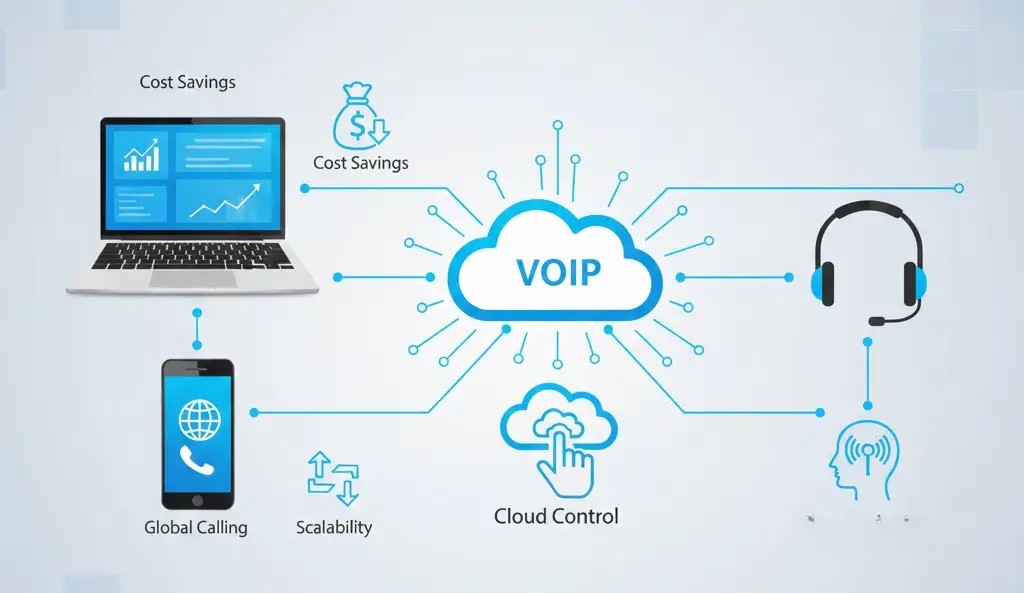
The future scope of VOIP technology is strong because it solves real business problems in a simple and scalable way. As more companies move to cloud-based systems, VOIP will continue to grow as a core communication technology.
Because of these advantages, the future scope of VOIP technology remains strong across industries, making it a long-term solution for modern communication needs.
Traditional telecom systems were built for a different time. They rely on fixed infrastructure, physical lines, and slow upgrade cycles. As business needs change faster than ever, these legacy systems struggle to keep up. This is one of the main reasons VOIP is becoming the future of telecommunications in India.
Old telecom networks depend on hardware-heavy setups and long maintenance cycles. Adding new lines, changing call flows, or expanding to new locations often takes time and money. These systems lack flexibility, which makes them unsuitable for modern businesses that need to adapt quickly.
VOIP runs on software, not fixed lines. This allows rapid updates, feature improvements, and easy integration with new technologies. As internet infrastructure improves, VOIP systems automatically benefit from better speed and quality without requiring physical upgrades. This ability to evolve quickly gives VOIP a clear advantage.
Cloud-first communication systems allow businesses to manage calls, users, and data from anywhere. Teams no longer depend on office-based hardware to stay connected. This approach supports remote work, multi-location operations, and real-time analytics – all of which are essential in today’s business environment.
Together, these factors explain why VOIP is the future of telecommunications in India. It offers flexibility, speed, and scalability that traditional telecom systems simply cannot match.
As VOIP continues to grow, businesses need to think beyond basic calling and focus on long-term communication strategy. Adopting VOIP is not just about replacing phone lines – it’s about choosing a system that can support growth, remote work, and changing customer expectations.
Companies should start by understanding their own needs. A small team may need simple calling and mobility, while a growing business may require advanced routing, analytics, and multi-location support. Planning early helps avoid frequent changes later and ensures smoother adoption.
To prepare for the future of VOIP in India, businesses should evaluate reliable VoIP Service Providers in India that offer scalable, secure, and regulation-compliant cloud telephony solutions.
Choosing the right provider at this stage helps businesses avoid technical limitations, maintain call quality, and stay compliant with local telecom guidelines. It also ensures that the VOIP system can evolve as the business grows and communication needs become more complex.
VOIP is not just a communication tool. When used correctly, it becomes part of a company’s long-term growth strategy. Businesses that think ahead use VOIP to improve efficiency, support teams at scale, and make better decisions using call data.
One major advantage is automation. VOIP systems can automate call routing, IVR responses, follow-ups, and call logging. This reduces manual work for teams and helps them focus on high-value tasks like sales, support, and relationship building. Over time, this improves productivity without increasing headcount.
VOIP also supports remote and multi-location teams. As businesses expand to new cities or work with distributed employees, VOIP keeps communication consistent. Everyone uses the same system, the same numbers, and the same workflows, regardless of location. This consistency is critical for customer experience and internal coordination.
Data plays a big role in long-term growth. VOIP systems provide insights into call volume, response times, missed calls, and performance trends. Businesses can use this data to improve customer service, train teams, and identify gaps in communication.
Companies planning long-term digital growth should explore business VOIP solutions that support automation, remote teams, analytics, and multi-location operations.
By aligning VOIP with growth goals early, businesses avoid repeated system changes later and build a communication foundation that scales smoothly as demand increases.
While the future of VOIP in India looks strong, it also comes with a few challenges. These issues are real, but they are not roadblocks. Technology upgrades and clearer regulations are already addressing most of them.
VOIP depends on a stable internet connection. In areas with poor connectivity, call quality can drop or calls may disconnect. This has been a concern, especially for businesses operating outside major cities.
How this will improve: Internet infrastructure in India is improving rapidly. Wider broadband access and the expansion of 4G and 5G networks will make VOIP more reliable across regions.
Because VOIP runs over the internet, it can be vulnerable to threats like call interception or unauthorized access if not properly secured. Businesses worry about data privacy and call safety.
How this will improve: Modern VOIP systems now use strong encryption, secure authentication, and regular updates. As security standards mature, VOIP communication will become safer and more resilient.
Telecom regulations in India continue to evolve, and businesses sometimes feel unsure about compliance requirements for VOIP usage.
How this will improve: Regulatory frameworks are becoming clearer as VOIP adoption increases. Providers and regulators are aligning on guidelines that balance innovation with compliance, making it easier for businesses to adopt VOIP confidently.
Overall, these challenges are part of any growing technology. With better infrastructure, stronger security practices, and clearer regulations, the future of VOIP in India will continue to move in a positive direction.
The direction is clear. VOIP will dominate business communication in India as companies move away from rigid, traditional phone systems and adopt cloud-based solutions that match modern work styles. Flexibility, scalability, and cost control are no longer optional – they are basic business needs.
By 2026, the future of VOIP in India will be shaped by AI-driven features, smarter automation, and cloud-first communication platforms. Businesses will expect seamless calling, intelligent routing, and real-time insights as standard, not as add-ons. VOIP will become a core part of daily operations, not just a support tool.
Organizations that adopt VOIP early gain a clear advantage. They move faster, spend less on communication infrastructure, and adapt easily to remote work and global operations. Those who wait will find it harder to catch up as customer expectations and business models continue to evolve.
In the coming years, VOIP will not just support business communication in India – it will define how businesses connect, collaborate, and grow.
VOIP is changing how businesses in India connect, collaborate, and grow. If you want clearer calls, better control, and a system that scales with your team, now is the right time to prepare.
At Creative IT Solutions, we help businesses move to modern cloud-based VOIP systems that are reliable, secure, and built for long-term growth.
The future of VOIP in India is strong and long-term. More businesses are moving to cloud-based communication because it is flexible, affordable, and easy to scale. With better internet and 5G expansion, VOIP will become the standard way businesses handle calls and customer communication.
Yes, VOIP calling is legal in India when used through licensed providers and in compliance with telecom regulations. Most business VOIP services operate within these guidelines, making them safe and reliable for companies across industries.
AI will make VOIP systems smarter. In the coming years, VOIP will use AI for call routing, voice bots, smart IVR systems, and call analytics. This will improve customer experience and reduce manual work for support and sales teams.
VOIP will play a major role in the future of call centers in India. Cloud-based VOIP systems allow call centers to scale quickly, support remote agents, and handle international clients more efficiently. This makes operations more flexible and cost-effective.
Over time, yes. Traditional phone systems are slow to upgrade and expensive to maintain. VOIP offers faster updates, better features, and lower costs, which is why more businesses are switching to VOIP as their primary communication system.
Absolutely. VOIP is especially useful for small businesses because it requires less hardware, offers affordable plans, and grows easily as the business expands. This makes VOIP a future-ready choice even for startups and SMEs.